Gokyo Lake Trek: Exploring the Quieter Side of Nepal’s Everest Region
Nepal’s Everest region is famous for the Everest Base Camp trek, but there is an alternative route that provides a different perspective on the same breathtaking Himalayan landscape. The Gokyo Lake Trek passes through traditional Sherpa villages, mountain forests, high alpine valleys and a string of turquoise glacial lakes before finishing at Gokyo Village at 4,790 metres.
The trek is perfect for those who seek dramatic mountain scenery but do not want to follow exactly the same route as the classic Everest Base Camp trek. The Gokyo Valley has its unique charm, with its lesser-trodden trails, glaciers, and some of the most spectacular views of the mountains. In addition, the trail offers a cultural experience as you interact with the local people and get familiar with the mountain village lifestyle, as well as acclimatizing yourself slowly to the altitude.
The standard itinerary takes around 12 days, including time for acclimatisation. This sees you flying towards Lukla, walking through Phakding and Namche Bazaar and eventually heading into the Gokyo Valley. The highest altitude on the main itinerary is Gokyo Ri at 5,357 metres, meaning altitude is one of the most important factors to take into consideration before beginning your trek.
Starting the Trek in Lukla
The adventure commences with a flight from Kathmandu to Lukla, which – though short – is memorable. Travelers are awed by the views of hills and valleys as well as Himalayan peaks as the aircraft approaches Lukla. This little town, located at about 2,850 metres, is a gateway to Everest. From Lukla, a trek begins to Phakding – the first stop on the way to Everest Base Camp. The walk takes three to four hours.
The trail follows the Dudh Koshi River and passes through small villages inhabited by Sherpas, pine forests and areas with Buddhist prayer flags. Phakding – a village located at around 2,650 metres – marks the end of the first day of the classic 12-day trek. One thing to note about this trek is that the mountain weather can affect the flight to Lukla and cause delays, so it is important to keep your itinerary flexible.
From Phakding to Namche Bazaar
The next day leads to a longer walk towards Namche Bazaar. The path winds past the Dudh Koshi River and crosses several suspension bridges. A famous landmark along this trail is the Hillary Suspension Bridge.The journey also passes through Sagarmatha National Park, a UNESCO World Heritage Site. The area becomes progressively more mountainous along the way as the trail heads towards Namche Bazaar.
Namche is located at around 3,440 metres and is one of the most important towns in the Everest region. It has been described as the Sherpa capital of the region and is a major trading and trekking centre.The community is also a key stop on the way as the body requires a period of adjustment to the increasing altitude.
Why Acclimatisation Matters
A good high altitude itinerary is not just about walking as far as possible every day. Acclimatisation is an important process when trekking to Gokyo Lakes and the standard itinerary allows for a day of rest and acclimatisation at Namche. As an alternative to sitting in the lodge you could take a short hike to a higher viewpoint and return to Namche to sleep. There are also the opportunities for exploring the surrounding area, visiting Khumjung, browsing the market or bakeries or learning more about the people and culture of the Sherpa.The altitude increases considerably past Namche as the trail winds on up through Dole at approximately 4,200 metres, Machhermo (around 4,470 metres) and Gokyo Village (approximately 4,790 metres).
Walking Through Dole and Machhermo
From Namche it starts to really become an Alpine trekking trail. The forests thin out and open up to wide valleys between mountains. Dole is an important overnight stop on the way towards Gokyo. From here the trail heads towards Machhermo, another acclimatisation point.
Machhermo lies in a wide mountain valley surrounded by high peaks. By now, the trek has got to a point where the altitude is much thinner than Kathmandu or Lukla.The walking time is not necessarily a big problem. Even easier things can feel much harder due to the altitude. Therefore, it is more helpful to keep a decent pace than to try to run anywhere.
Reaching Gokyo Valley
The walk from Machhermo to Gokyo is one of the picture postcard parts of the route, where the trail gradually passes through more rocky terrain, glaciers, streams, moraines and turquoise lakes. The huge Ngozumpa Glacier is also one of the main geographical features of the region. This is described as the largest glacier in Nepal. The route offers fantastic opportunities to see this stunning high altitude landscape up close.
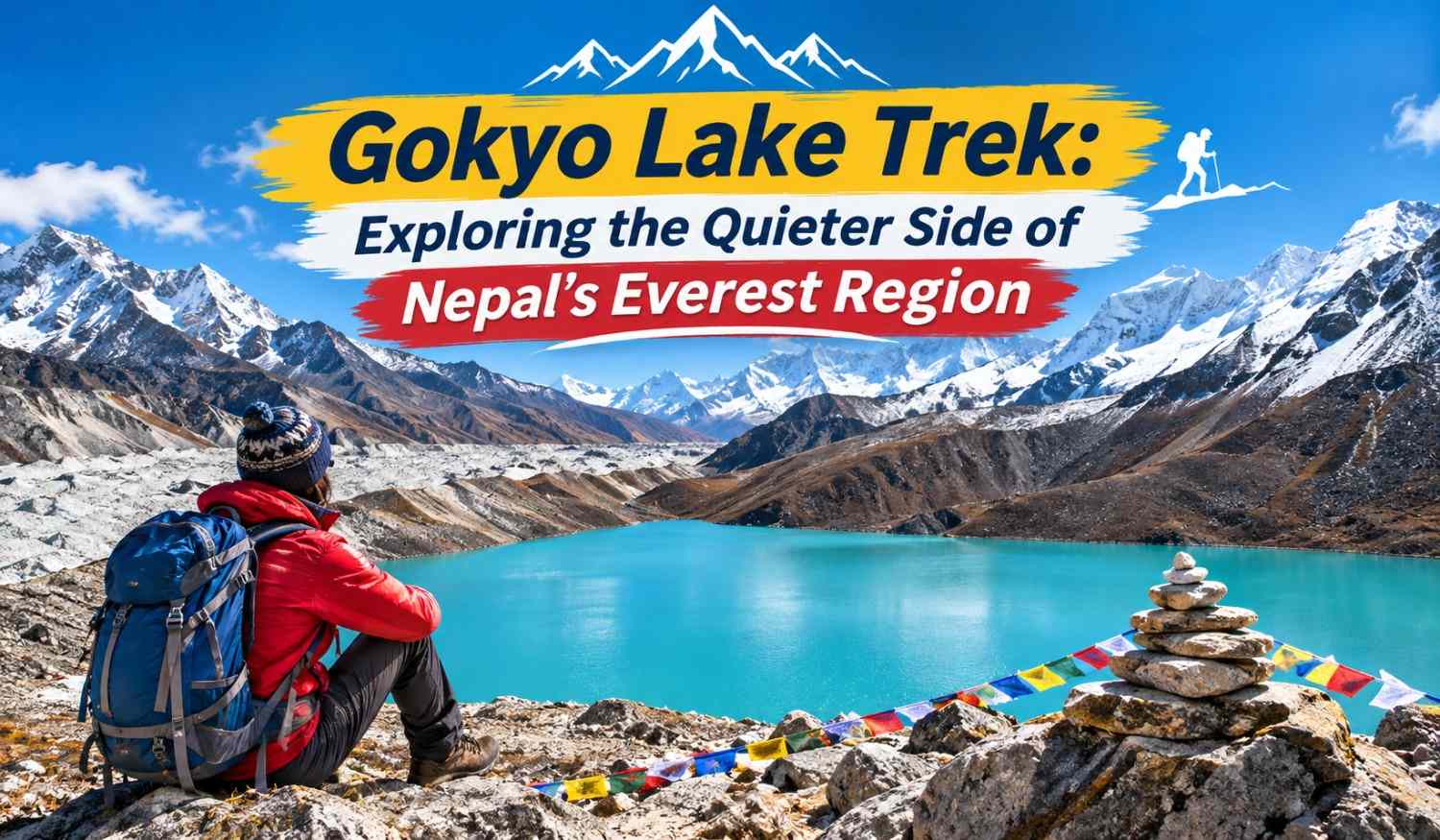
Eventually, the trail ends at Gokyo Village, situated at around 4,790 metres. The village is located next to Dudh Pokhari, a famous Gokyo Lake that is one of the most iconic sights of the entire trek. The magnificent turquoise glacial lake contrasts beautifully with the rugged mountain slopes and snow-capped peaks surrounding it. The Gokyo Lakes are one of the main reasons why hikers prefer this route over the more well-trodden Everest Base Camp trail.
Gokyo Ri and the Himalayan Panorama
For many trekkers, the highlight of the trip is the climb up to Gokyo Ri. At 5,357 metres, Gokyo Ri offers a magnificent view over the surrounding Himalayan landscape, including several mighty peaks such as Mount Everest, Lhotse, Makalu and Cho Oyu in the distance. From this altitude, you will also get a fantastic view of the massive Ngozumpa Glacier.
The climb is a challenging one due to the altitude involved rather than due to technical aspects of the climb. Sufficient physical preparation, gradual acclimatisation and a good pace are essential. Because of the spectacular mountain views on offer, an early morning ascent is commonly included in trekking itineraries. Standing above the valley with the surrounding lakes and glaciers below makes this one of the most rewarding experiences on the trek.
Life in the Mountain Tea Houses
Accommodation on the Gokyo route is typically based around hotels, lodges and traditional tea houses.The experience gets simpler the higher up the trail you go. The standard package includes twin-sharing accommodation during the trek, with private bathrooms and hot showers specified for Phakding, Namche and Lukla. Meals are a big part of the trekking experience. The standard package includes breakfast, lunch and dinner during the trek, as well as tea and coffee.
Trekkers should still expect a relatively simple mountain menu. Warm meals, hot drinks and hearty food are particularly appreciated after several hours on the trail.The company also recommends a sleeping bag suitable for temperatures down to around -10°C, warm layers, gloves, a waterproof jacket, trekking boots and other cold-weather equipment.
What Does the Trek Cost?
The cost of a Gokyo trek depends on the size of the group and what is included in the offer. Generally 12-day package begins at US 1,350$, with varying prices depending on the size of the party. The listed price is US 1,450$ for one person,US 1,350$ for two and lower rates per person for bigger groups.The package covers transport, Kathmandu accommodation, flights between Kathmandu and Lukla, meals on the trail, tea and coffee, trekking accommodation, a guide, porters, permits and a basic first-aid kit.
International airfare, Nepal’s visa, personal expenses, bottled water and soft drinks, tips, rescue and evacuation are all additional costs. Travelers, therefore, need to budget more than the cost of the trek when planning their finances. The company also advises travelers to plan to spend around US15$ to US2$0 per day on extras such as snacks, Wi-Fi, charging and tips.
How Difficult Is the Gokyo Lake Trek?
The Gokyo Lakes Trek is a challenging high-altitude trek.While it doesn’t involve technical climbing, hikers must be in good shape and reasonably fit and prepared. Expect to walk several hours a day on uneven terrain that includes rocky stretches, steep grades, and rickety bridges, all while acclimating to the high altitude. The trek’s highest point, Gokyo Ri, is 5,357 meters.
Altitude training becomes an issue. A person who is reasonably fit to hike at sea level should not assume they will be the same way at 4,000 or 5,000 meters.The best thing to do is start training for the trek about four to six weeks in advance. You want to focus on cardio and hiking and build your endurance. Another crucial element is travel insurance that covers high-altitude trekking, medical care, and emergency evacuation.
When Should You Visit Gokyo?
The best seasons for trekking to Gokyo are spring and autumn. The trek information highlights March to May, and September to November as the best seasons to go trekking.The spring months bring warmer temperatures and varying vegetation at lower altitudes, and the autumn months provide great mountain visibility after the monsoon season.
Trekking during winter is significantly colder, especially above 4,000 metres, and remote tea houses might be shut down due to snowfalls. The monsoon season entails lush vegetation at lower altitudes but also presents rain, slippery slopes, overcast weather and occasional disruption of flights.For those primarily interested in mountain vistas and trekking on a pleasant terrain, the seasons of spring and autumn are generally the most suitable for visiting Gokyo.
Gokyo Lake Trek or Everest Base Camp?
The choice between Gokyo and Everest Base Camp depends on what a hiker wants to experience in the Himalayas. Everests Base Camp is better known and offers a unique sense of achievement, but the Gokyo area provides more diverse opportunities for a hiker who wishes to experience the local glacial lake ecosystems, enjoy views over the Everest massif, and reach a remote monastery.
Gokyo’s trail is much more varied in terms of scenery than the one to Everest Base Camp, offering a chance to see glacial lakes, snow-capped Everest peaks, and glaciers. Both routes involve visiting traditional Sherpa villages and exploring Buddhist culture, but Gokyo allows to visit unique local lakes and a high-mountain viewpoint. Thus, Gokyo is a great alternative for someone who has already done the Everest trek or is looking for variety.
A Different Way to Experience the Himalayas
The Gokyo Lakes Trek is not only the challenge of a high altitude lake quest. This trek consists of the gradual change in the scenery, ranging from the verdant valleys of Phakding to the coniferous forests around Namche and the alpine rock face surrounding Gokyo. In addition, this trail boasts both nature and culture. The Sherpa villages, the prayer flags, the monasteries, the tea houses and the suspension bridges are all part of the Gokyo Trek. On the higher altitudes, the flora disappear, replaced by a landscape of mountains, glaciers and lakes.
For those that are seeking another option to the classic Everest Base Camp route, Gokyo Valley is undeniably a more isolated and scenic experience. The combination of Gokyo Lakes, Gokyo Ri, Ngozumpa Glacier and the views of Everest, Lhotse, Makalu and Cho Oyu make for one of the most rewarding high-altitude trekking experiences in Nepal.