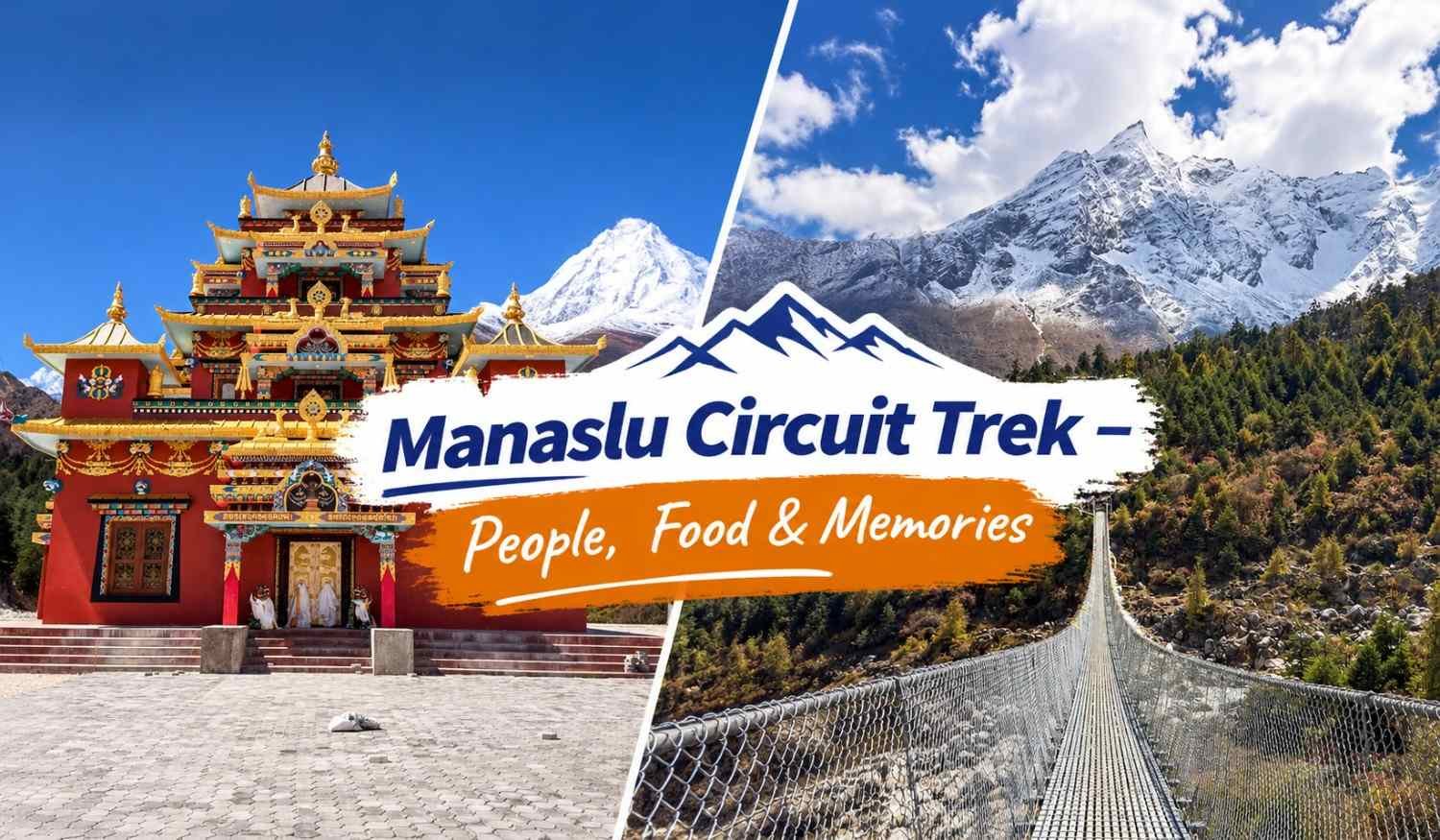
Manaslu Circuit Trek: People, Food & Memories | My Experience
A great trek will offer so much more than amazing scenery. Whilst we go trekking to see the mountains, it’s often the people, food and unique moments that will create such an incredible experience. This trek offers so much more than the mountains. You’ll be travelling through isolated villages, lush forests, deep river valleys and majestic mountains where you’ll get a real insight into what life is like.
The trek circles around Mount Manaslu, the world’s 8 th highest mountain, in the Manaslu region of Nepal. This is a beautiful route to take as you’ll see incredible nature, traditional villages and the challenge of crossing the Larkya La Pass. This is also a great way to immerse yourself in mountain culture. Although this trek is not an easy walk and will require preparation, patience and time to get used to the increasing altitude.
What makes this trek so unique is not only seeing famous mountain views but also getting to walk at a slower pace and really appreciate the little things.
Beginning the Trek
The trek to the Manaslu region usually begins with a long drive to either Soti Khola or Machha Khola, depending on the road conditions and trek plan. As you drive away from Kathmandu you will see the scenery transforming from the busy streets back to lush green hills, rivers, terraced fields and small villages.
Starting a mountain trek always gets me excited. I love having the time to get myself into ‘trek mode’ and really get into the mindset of the days ahead. The drive can be tiring but the changing scenery makes it more enjoyable and reminds you that trekking doesn’t just start once you put on your hiking boots!
Once you start walking, the path will follow the Budhi Gandaki River. You’ll walk through narrow valleys and small villages. There will be many suspension bridges to cross, rocky terrain, waterfalls and sections of forest. There will be some gentle walking but also some long uphill sections. Walk at a steady pace.
Early Days of Trek
The Manaslu Circuit Trek will get you into the beautiful region. You’ll travel through villages such as Jagat, Deng and Namrung (depending on your trek plan). As you increase in altitude the lower sections will be covered in more greenery. The higher you get the cooler it will become.
One of the interesting parts of this trek is walking alongside the Budhi Gandaki River. In some sections it will be very calm and in others fast flowing between the steep rock faces. There will be long sections of walking with the sound of the water which creates a peaceful vibe.
However, there are also sections of the trek which are not so comfortable. There are steep climbs, uneven ground, stone steps and narrow sections. After a few hours your legs will start to get tired, especially with a rucksack on. It’s important to take your time and have a quick break, have a drink and enjoy the scenery.
Something I love about trekking in Nepal is how quickly the landscape can change. You may be walking next to a river, then next you will be walking through a forest. Soon you’ll come across a small village and then will have amazing views of the mountains. Every day will be slightly different which makes it an interesting trek.
People & Villages
The Manaslu region is known for its traditional mountain communities and has a strong influence of Tibetan Buddhism. You’ll notice throughout the villages there are many stone buildings, prayer flags, mani walls, chortens and monasteries. These are all part of the local culture.
Samagaun and Samdo are particularly interesting villages to visit. The villages are traditional and life is very connected to the mountains, seasons and resources available. The locals have adapted to living in these conditions which can be tough for city visitors.
Throughout your trek you will visit teahouses. These are important to have a break, eat and meet other trekkers. Often they are simple but provide a friendly place to spend the evening. Having a quick chat with the owner of the lodge or other trekkers will make this feel more personal.
Remember these villages are homes to locals. Ask before taking pictures, respect their culture and don’t disturb any religious sites. Try to support local teahouses and shops.
Food
Food is always a key part of any trek. After walking up and down all day it’s lovely to sit down and have a warm meal. During your trek you’ll often have Dal Bhat. This is a popular meal to have and consists of rice, lentil soup, vegetables and pickles. It will fill you up and give you energy for the next day of trekking.
Teahouses will also have many meals on offer such as vegetable noodles, fried rice, soups, potatoes, eggs and Tibetan food. As you increase in altitude the options may become more limited. The food will be simpler as it needs to be transported to the villages.
There is something special about eating in mountain teahouses. The dining areas are often very simple. However, it’s a lovely way to spend time with other trekkers, warm up after a cold day and prepare for the next morning.
Having a few snacks in your rucksack will also be useful. Nuts, chocolate or energy bars are perfect to have on hand.
Weather
The weather is an important factor to consider when trekking in the Himalayas. With increasing altitude the weather can change. The lower villages may be quite warm but the higher villages can be very cold, especially in the mornings and evenings. The weather can also be affected by wind, rain, snow and clouds.
It’s important to wear the right clothing. I’d recommend wearing layers, a waterproof jacket and trousers, comfortable trekking shoes, gloves, a hat and extra socks. Keeping your clothes dry in a waterproof bag will help if the weather changes.
This is a challenging trek. One of the main factors to consider is the altitude. As you increase in altitude your pace will slow and you may struggle to breathe. Don’t rush, even if you feel very strong in the first few days. It’s important to properly acclimatise, have plenty of rest, regular meals and drink plenty of water.
The best times to trek are usually during spring and autumn. During spring the weather will be more mild and the lower areas will be full of blooming flowers. Autumn is popular as you’ll have clearer mountain views. During winter the snow can be heavy and conditions can be tough around the high pass. During the monsoon season you may get rain, slippery paths and risk of landslides.
Samagaun
Samagaun is one of the key villages to visit during your trek. It sits below Mount Manaslu and offers stunning mountain views. You’ll also have extra time to get used to the altitude. Many trek plans will include an acclimatisation day here.
These days are very important. It can be tempting to keep walking as there is so much to see but your body needs to adjust to the higher altitudes. Many trekkers will take the extra day to explore the village or take a gentle walk to nearby viewpoints depending on their health and what their guide recommends.
The scenery will feel very different to the lower sections. The forests will be less dense, the air will feel colder and the mountains will feel much closer. This is a great place to take your time and really enjoy the environment.
Larkya La Pass
One of the most memorable and challenging sections of your trek will be crossing the Larkya La Pass. This will take you to around 5106m above sea level. Many trekkers will find this the most challenging part of their trek. The trek will start early, you’ll have a long climb and will be trekking at a high altitude.
This section shouldn’t be taken lightly. It can be very cold and may be challenging due to snow or strong winds. It’s important to be well prepared, wear the right clothing and take your time. This section should only be attempted when you feel it’s safe to do so. An experienced trekking professional will help you with this.
After walking for days you’ll feel like you’ve achieved something by reaching the top. The mountain views will be stunning and the landscape will feel completely different to the lush valleys. However, you will still need to carefully descend to the other side. Often you’ll reach Bimthang after a long day.
This is a great challenge to remind us why patience is important when trekking in the mountains.It’s not about how fast or strong you are. It’s about being well prepared, respecting the conditions and taking your time.
Lessons Learned
This trek will teach you many lessons. You will learn that a successful trek isn’t just about reaching your destination but making good decisions, listening to your body and understanding the challenges of the environment.
This is a restricted trekking area so you will need the correct permits. Under current trekking rules foreign trekkers will need to trek with a licensed guide and arrange the correct permits through an authorised trekking agency. Before booking it’s worth checking what the latest requirements are and ensuring your trek plan will give you enough time to acclimatise.
If you’re organising this route it may be worth considering using a reliable trekking company in Nepal. Ensure your guide has the right experience, safety measures, group size and what is included. It’s also important to know the signs of altitude sickness. If you’re experiencing headaches, nausea, dizziness and odd tiredness don’t ignore them. Stop ascending and ask for advice. If you’re experiencing serious or worsening symptoms you should descend immediately and seek medical help.
A good preparation plan should include wearing the right clothing, comfortable shoes, personal medication, sun cream, sunglasses, first aid kit and travel insurance for high altitude trekking and emergency evacuation.
Why I’d Remember this Trek
When thinking about this trek I think about much more than just seeing Mount Manaslu and crossing the Larkya La Pass. I think about the river valleys, traditional villages, mountain teahouses, simple food and varied landscape. These make this trek unique.
Manaslu is a fantastic destination to trek to if you want to see a more quiet and remote part of the Nepal Himalayas. It’s a challenging trek and will require more planning than some of the shorter treks but offers a beautiful mix of nature and local culture.
If you’re looking to trekking in Nepal this trek is definitely something to consider. If you have enough time, proper preparation and a reasonable level of fitness this is a great trek to do. Take your time, respect the local communities and never rush in the mountains. Sometimes the simplest moments are the ones we’ll remember the most.
Also Check These