The Hadimba Devi Temple in Manali is more than just a religious structure, it’s a living testament to myth, devotion, and history. Surrounded by towering deodars, enriched with the essence of the Mahabharata, and pulsing with the faith of thousands, this sacred site remains a cornerstone of spiritual life in Himachal Pradesh.
Whether you’re a history enthusiast, a spiritual seeker, or a nature lover, a visit to this mystical temple will leave you with a profound sense of peace, awe, and connection to India’s timeless heritage.
Nestled amidst the dense cedar forests of Manali in Himachal Pradesh lies one of the most spiritually and architecturally significant landmarks of Northern India.
The Hadimba Devi Temple, also known locally as the Dhungari Temple. Revered by locals and cherished by travelers, this ancient cave temple is a mystical blend of mythology, natural beauty, and cultural heritage.
Introduction
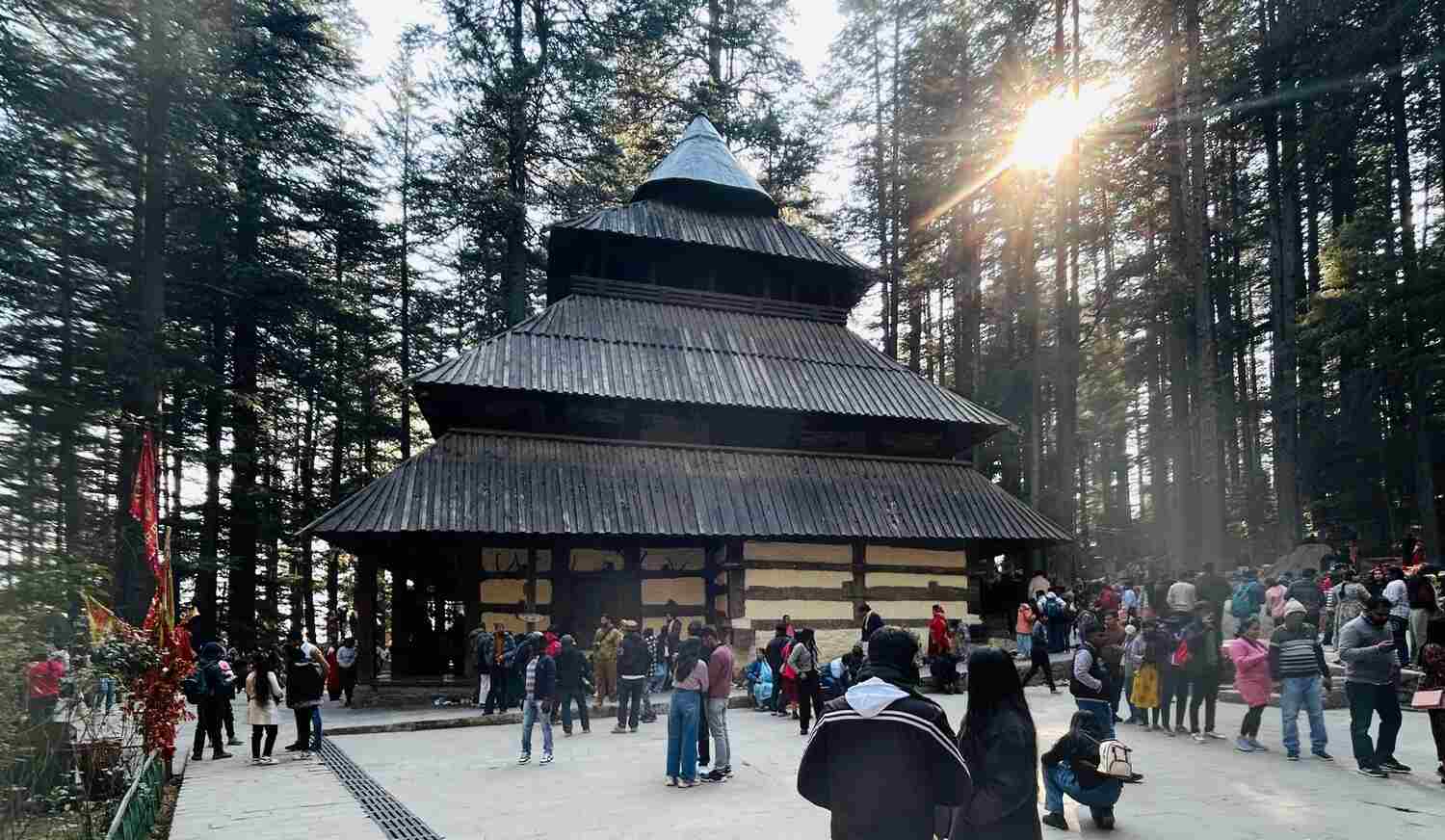
The Hadimba Devi Temple, also called Hidimba Temple, is located in the picturesque hill station of Manali in the Kullu Valley of Himachal Pradesh.
Surrounded by a majestic cedar forest known as Dhungiri Van Vihar, the temple is a spiritual haven for devotees and a scenic gem for nature lovers.

This temple is dedicated to Goddess Hidimba, the wife of Bhima, the second of the five Pandava brothers from the Indian epic Mahabharata.
Built in 1553 CE by Maharaja Bahadur Singh, the temple sits atop a massive rock that is believed to be a manifestation of the goddess herself.
With a height of 24 meters, the temple structure reflects an exquisite blend of Himachali and traditional Indian temple architecture.
Historical Significance
The temple’s history traces back to the Mahabharata era. Hidimba, born into a Rakshasa (demon) clan, lived in the forest with her fearsome brother Hidimb. She had vowed to marry only a man who could defeat her brother in combat.
During their exile, the Pandavas reached the region of modern-day Manali. In a fierce duel, Bhima, the strongest Pandava, vanquished Hidimb. Fulfilling her vow, Hidimba married Bhima and bore him a mighty son, Ghatotkacha.
After Bhima and the Pandavas left, Hidimba chose a life of meditation and penance in the forest. Her devotion led to her deification, and she came to be worshipped as Hadimba Devi. The temple was constructed in her honor centuries later.
Spiritual Importance and Worship Practices
The Hadimba Devi Temple is a revered Hindu pilgrimage site in Himachal Pradesh. While most of India celebrates Navaratri by worshipping Goddess Durga, the people of Manali turn to Hadimba Devi as their guardian deity.
During this time, the temple sees a significant influx of pilgrims and devotees from all over India.
A special event, the Hadimba Devi Fair, is held annually in spring. It’s a vibrant cultural gathering marked by local music, dance, and spiritual fervor, celebrating the goddess and her contributions to local mythology and faith.
Notably, unlike conventional idols, Hadimba Devi is worshipped in the form of a rock inside the temple. Only a 7.5 cm (3-inch) brass image of the goddess is present, keeping the focus on the sanctified stone.
Devotees believe this connection to the natural element enhances the divine aura of the temple.
Architectural Splendor
The temple architecture is distinct from typical North Indian temples. Crafted mostly of wood and stone, the Hadimba Devi Temple reflects traditional Himachali pagoda-style design.
Key Features:
- Shikhar (tower): The temple rises to a height of 24 meters, with three square-shaped roofs covered in wooden shingles and a fourth brass cone-shaped spire at the top.
- Intricate Carvings: The wooden doors and outer panels display detailed carvings of goddesses, animals, dancers, and foliate patterns, as well as scenes from the life of Lord Krishna and the Navagrahas (nine celestial bodies in Hindu astrology).
- Main Shrine: The sanctum features a large rock that is the principal object of worship. According to legend, a rope hangs from the ceiling, which in the past was used in symbolic penance rituals for sinners.
- Footprint Stone: Perhaps the most divine element of the temple is a stone block bearing the footprints of the goddess, which is worshipped by pilgrims with deep reverence.
The Ghatotkacha Shrine
Approximately 70 meters from the main temple lies a small shrine dedicated to Ghatotkacha, the son of Hidimba and Bhima.
Ghatotkacha is celebrated in Mahabharata as a powerful warrior who fought valiantly in the Kurukshetra war and sacrificed his life for the Pandavas.
This shrine is visited by those who wish to offer prayers for courage, protection, and strength, honoring Ghatotkacha’s valor and lineage.
Mythological Connection
A Story from the Mahabharata
The Mahabharata recounts that during their exile, the Pandavas ventured into the forests of present-day Manali. It was here that they encountered Hidimb and his sister Hidimba.
When Hidimb attacked the Pandavas, Bhima took on the challenge and defeated him in combat. Hidimba, impressed by Bhima’s strength and nobility, chose him as her husband.

Their son, Ghatotkacha, inherited the strength of his father and the mystical powers of his Rakshasa lineage. He played a pivotal role in the Kurukshetra war, using his magical abilities to fight for the Pandavas.
Hidimba, after Bhima’s departure, remained in the forest and undertook deep tapasyā (meditation and penance).
Her asceticism eventually elevated her to the status of a goddess Hadimba Devi and led to the consecration of this sacred temple in her name.
Visiting Hadimba Devi Temple
What You Need to Know
- Location: The temple is located about 1.5 kilometers from Manali’s Mall Road, making it easily accessible by foot or by local transport.
- Best Time to Visit: Spring and summer (April to June): Pleasant weather and the Hadimba Devi Fair make this the ideal time.
- Autumn (September to November): Cool and calm, perfect for spiritual retreats.
- Avoid heavy winter months (December–February) if you are not accustomed to snow, though the temple blanketed in snow has its own charm.
Nearby Attractions:
- Manu Temple
- Vashisht Hot Springs
- Solang Valley
- Old Manali Village
FAQs
What is the Hadimba Devi Temple?
The Hadimba Devi Temple is an ancient Hindu temple in Manali, Himachal Pradesh. It is dedicated to Hadimba Devi, the wife of Bhima from the Mahabharata.
Why is the Hadimba Temple famous?
The temple is famous for its unique architecture, its connection to the Mahabharata, and its peaceful location in a cedar forest. It’s also a popular spiritual and tourist destination.
Who was Hadimba Devi?
Hadimba Devi was a demon princess who married Bhima, one of the five Pandava brothers. After Bhima left, she meditated in the forest and was later worshipped as a goddess.
When was the Hadimba Devi Temple built?
The temple was built in the year 1553 CE by Maharaja Bahadur Singh.
Where is the Hadimba Temple located?
It is located in Dhungari Forest, about 1.5 kilometers from Mall Road, Manali, in Himachal Pradesh, India.
What is special about the temple’s design?
The temple is made of wood and stone. It has a tall tower with wooden roofs and detailed carvings of gods, animals, and nature scenes. A large rock inside the temple is worshipped as Hadimba Devi.
What festivals are celebrated at the temple?
The Hadimba Devi Fair is held every spring. During Navaratri, locals especially worship Hadimba Devi instead of Durga, which is different from other parts of India.
Who was Ghatotkacha?
Ghatotkacha was the son of Hadimba and Bhima. He was a powerful warrior in the Mahabharata. A small shrine dedicated to him is near the temple.
Can tourists visit the temple?
Yes, the temple is open to all visitors. It’s a popular spot for both devotees and tourists because of its peaceful surroundings and historical importance.
What is the best time to visit Hadimba Devi Temple?
The best time to visit is during spring and summer (April to June) or in autumn (September to November) when the weather is pleasant.
Also, Check These Places if You Visit Manali
Story Of Bijli Mahadev Temple, Kullu | Mystery | Best Time To Visit | Wiki | History